
Sensitivity Stress Test of CNY Fluctuations on Domestic Equipment Import Costs
Exchange rates are often discussed as abstract macro variables, but for firms that import equipment they show up as very concrete line items: higher or lower invoice amounts, changed project budgets, revisions to CapEx plans. In China, where many of the most advanced production tools and capital goods are still imported and priced in foreign currencies—especially dollars, euros, and yen—fluctuations in the renminbi (CNY) can have a direct and sometimes material impact on domestic equipment import costs.
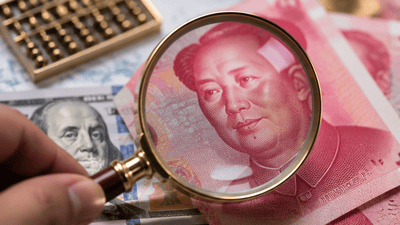
This post walks through a sensitivity stress test framework for thinking about CNY moves and equipment import costs. We’ll connect the dots from interest rates, exchange rates, credit, and commodities to the balance sheet of a domestic importer, and explore how different scenarios—appreciation, depreciation, volatility—might play out. The aim is to keep the discussion flexible and polished, rather than overly rigid, because real-world stress testing needs room for nuance.
Why CNY Matters for Domestic Equipment Importers
China’s equipment importers—whether in manufacturing, energy, logistics, or technology—care about CNY for three main reasons:
- Pricing currency: Many high-tech and heavy equipment imports are invoiced in foreign currencies, most commonly USD, EUR, or JPY. A change in the CNY exchange rate against those currencies changes the local currency cost of the same machine or system.
- Capital budgeting: Domestic firms plan CapEx in CNY terms. Exchange rate moves can cause imported project costs to rise or fall relative to domestic alternatives, affecting investment decisions.
- Financing and credit: Exchange rate shifts often come along with changes in domestic and global interest rates and credit conditions, altering both the cost of equipment and the cost of funding it.
A sensitivity stress test essentially asks: if CNY strengthens or weakens by X %, what happens to my equipment import costs, given the way contracts, financing, and commodity inputs are structured? And how does that change if interest rates or commodity prices move at the same time?
Building a Sensitivity Framework: Core Variables
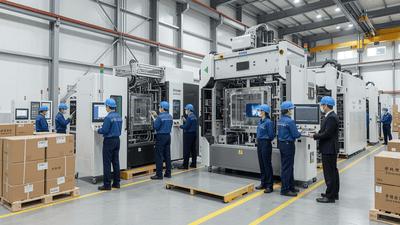
To set up a stress test, you need a basic framework. Four macro variables are central:
- Exchange rate (CNY vs foreign currencies): Directly affects the local price of imported equipment.
- Interest rates: Influence both the exchange rate and the cost of financing CapEx—domestic lending rates, bond yields, and perhaps offshore funding costs.
- Credit conditions: Determine whether banks and markets are willing to fund large imports, and at what spreads.
- Commodities: Affect the cost of equipment itself, when machines embed significant metal, energy, or other inputs whose prices move with global cycles.
A stress test chooses scenarios for these variables—for example, 10% CNY depreciation, 100 basis point rate hikes, modest widening in credit spreads, and flat commodity prices—and then calculates the impact on equipment import costs as seen by a domestic firm.
CNY Appreciation Scenario: Cheaper Imports, Mixed Signals
Start with a CNY appreciation scenario: CNY gains 5–10% against a basket of import currencies (USD, EUR, JPY). On the surface, this looks positive:
- The local CNY cost of equipment priced in foreign currency falls—each dollar or euro buys fewer CNY.
However, macro linkages complicate the picture:
- Appreciation may reflect tighter domestic monetary policy or capital flows, which could raise domestic interest rates and credit costs.
- Higher rates can increase the CNY cost of financing the same imports, partially offsetting the currency benefit.
- If CNY strength reflects global risk-off sentiment or weaker external demand, firms may become more cautious about expansion despite cheaper equipment.
A sensitivity stress test would ask: given a 10% appreciation, how much do invoice costs fall? Then, how much do financing costs rise under plausible rate and credit scenarios? The net effect may still be positive for import costs, but it might be smaller than the simple FX impact suggests.
CNY Depreciation Scenario: More Expensive Imports, Possible Demand Boost

Now invert the scenario: CNY depreciates by 10%. Imported equipment priced in foreign currencies becomes more expensive in CNY terms:
- Invoice costs rise by roughly the depreciation percentage, assuming prices in foreign currency stay constant.
- Domestic firms face higher CapEx budgets for imported tools and may look for domestic substitutes or delay projects.
Macro linkages again matter:
- Depreciation might be accompanied by looser domestic monetary policy, lower local interest rates, and more credit availability, which can ease funding despite higher equipment prices.
- Weaker CNY can support export competitiveness and stimulate demand in sectors that rely on exports, potentially justifying higher CapEx even at higher equipment costs.
- Global commodity prices may behave differently; if depreciation coincides with lower global prices, the embedded material costs in equipment might ease somewhat.
A stress test would calculate the direct FX cost increase and then overlay interest rate and credit effects. Firms might discover that while import prices rise, more favorable financing and stronger export demand offset some of the pain, especially in sectors integrated into global supply chains.
Volatility and Asymmetry: More Than Just Up or Down
Exchange rate stress testing cannot assume that CNY moves smoothly. Volatility and asymmetry matter:
- Short bursts vs sustained trends: A brief spike in FX volatility may have limited impact if firms can delay purchases; sustained depreciation or appreciation changes long-term cost structures.
- Asymmetric elasticity: Firms may respond more aggressively to depreciation (cost increases) than to appreciation (cost decreases), adjusting procurement or CapEx plans only when pain becomes visible.
- Contract structures: Some equipment imports may be hedged or contracted at fixed CNY prices, muting sensitivity in the short term but not in the long term.
A sensitivity stress test should therefore consider not only the size of CNY moves but their duration and how firms’ behavior changes when thresholds are crossed—through renegotiation, hedging, or substitution.
Interest Rate and Credit Overlay: Stress Testing the Full Financing Chain

Exchange rate impacts are often amplified or dampened by interest rate and credit conditions. To make a stress test realistic, you can design composite scenarios:
- Scenario A: Strong CNY, high rates: Imports cheaper in CNY, but financing more expensive. Domestic equipment importers with strong balance sheets may still benefit; those relying heavily on debt may not.
- Scenario B: Weak CNY, low rates: Imports more expensive, but easier to fund. Export-oriented firms might still invest; domestic-focused firms might hesitate.
- Scenario C: Volatile CNY, tightening credit: Both import costs and financing conditions deteriorate, pushing firms to delay or downsize equipment purchases.
By quantifying both invoice impacts and financing impacts under these overlays, firms and investors get a more holistic view of how FX and macro conditions interact. For instance, an equipment-heavy sector could see a 10% increase in import costs but also a 20–30% increase in funding burden in a credit-tightening scenario—multiplying stress beyond what FX alone implies.
Commodities and Input Costs: Hidden FX Sensitivity
Equipment is not just foreign currency; it embeds commodities whose prices are themselves influenced by global macro conditions:
- Metal-intensive equipment (machinery, industrial tools) is sensitive to global steel, copper, and aluminum prices.
- Energy-intensive production of equipment may respond to oil and gas prices; FX shifts often coincide with commodity cycles.
- Depreciation of CNY during global commodity downcycles might mean higher FX costs but lower embedded commodity costs, partly offsetting the total impact.
Stress testing should consider this second-order effect: in some scenarios, the cost increase from CNY depreciation may be cushioned if commodity prices fall. Conversely, if depreciation occurs alongside rising commodity prices, the cost pressure on imports can be significantly amplified.
Hedging and Procurement Strategy: Practical Responses to FX Stress
Sensitivity analysis is most useful when it leads to practical responses. Domestic equipment importers have several tools:
- FX hedging: Use forward contracts, options, or other instruments to lock in import prices in CNY, mitigating short-term FX sensitivity.
- Currency diversification: Where possible, negotiate invoices in currencies other than USD that may have different correlations with CNY and commodity prices.
- Procurement timing: Align large imports with periods of more favorable FX conditions or hedging costs, when volatility is lower and spreads tighter.
- Supplier diversification: Consider domestic or regional suppliers whose pricing may be more aligned with CNY and less exposed to extreme FX shocks.
A stress test can inform hedging and procurement decisions: if scenarios show large cost sensitivity to CNY moves, firms have a stronger case to invest in hedging capacity or flexible procurement schedules.
Sector Differences: Not All Importers Are Alike
A subtle but important point is that sectors differ in how they experience FX stress:
- High-tech equipment importers: Semiconductor tools or specialized medical devices may have less scope for domestic substitution and higher sensitivity to FX; hedging and financing conditions become critical.
- Commodity or mid-tech equipment importers: Standard machinery or vehicles may have more domestic or regional alternatives, allowing substitution when FX makes imports too costly.
- Processing vs final goods: Firms importing components for processing and re-export have a different calculus than those importing final equipment for domestic use; FX sensitivity interacts with export revenue in complex ways.
Stress testing should therefore be sector-specific. A generic “10% FX move” may mean very different things to a fab buying extreme ultraviolet lithography tools vs a factory buying generic industrial robots.
Integrating Stress Test Results into Macro-Aware Portfolio Decisions
For investors in domestic equipment importers—equity, credit, or multi-asset—the stress test results feed into portfolio decisions:
- Valuation sensitivity: If FX scenarios show that import costs can squeeze margins significantly, valuations might need higher risk discounts in periods of CNY volatility.
- Balance sheet analysis: Firms with strong cash positions and low leverage can absorb FX shocks better than highly geared firms; stress tests highlight who is more vulnerable.
- Macro tilts: Investors can tilt toward firms and sectors that show lower sensitivity to adverse FX, rate, and credit scenarios during periods of macro uncertainty.
In times of rising interest rates, uncertain global liquidity, or commodity volatility, a macro-aware portfolio will treat CNY stress as more than an FX issue—it becomes part of a broader risk mosaic that influences position size, time horizon, and hedging choices.
Closing Thoughts: Seeing FX as Part of a System, Not a Single Shock
“Sensitivity Stress Test of CNY Fluctuations on Domestic Equipment Import Costs” is, in truth, a way of recognizing that exchange rates are part of a system. CNY moves rarely come alone; they travel with shifts in interest rates, credit conditions, and commodity prices. For domestic equipment importers, this system translates into real decisions: buy now or later, hedge or accept risk, invest or wait.
A good stress test doesn’t give you one answer; it gives you a map of how costs might respond under different macro paths. It shows where the biggest vulnerabilities lie and where flexibility or hedging can make the most difference. In a world where currency and macro volatility remain part of the landscape, seeing that map clearly is one of the most valuable defenses a domestic equipment importer—or an investor in those importers—can have.